2026-10-15 ·
How Local Humidity Levels Slow Water Damage Drying
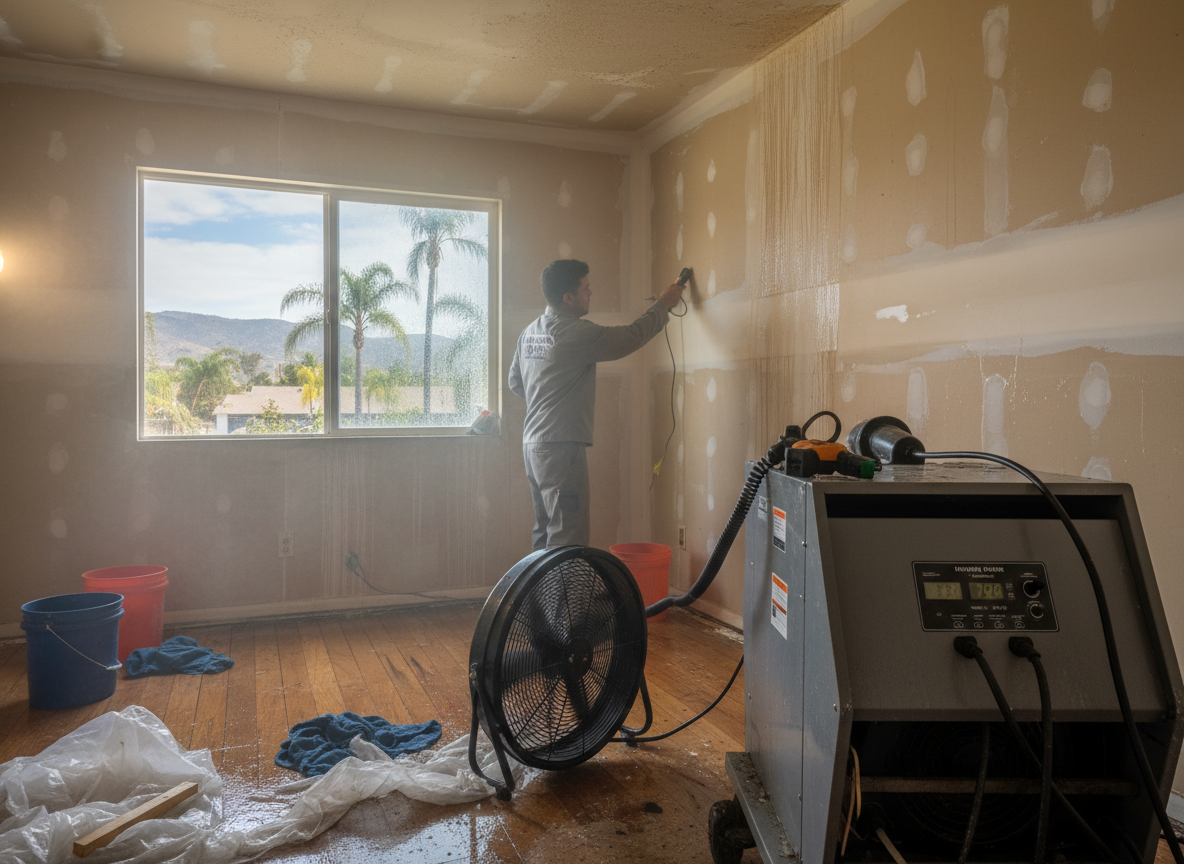
In Canoga Park, relative humidity from water damage itself often stretches professional drying from the typical 3–5 days to 6–8 days or longer during summer months when outdoor air holds more moisture than expected in a Mediterranean pattern.
How Canoga Park Humidity Interacts with Local Weather Patterns
Canoga Park sits in Los Angeles County with a warm Mediterranean climate marked by hot, dry summers that still produce indoor humidity spikes once water enters a structure. When moisture from a leak or flood evaporates, it raises relative humidity inside walls and under floors, slowing evaporation even when outdoor conditions near Westfield Topanga feel arid. Crews measure this with hygrometers because ambient air at 50–60% relative humidity prevents standard air movers from pulling moisture out at full speed. Homes built before 1980 around Pierce College often lack modern vapor barriers, so humidity lingers in plaster and hardwood. This forces technicians to run dehumidifiers longer and monitor daily moisture readings instead of relying on calendar estimates. The same pattern appears after storms that push extra moisture into neighborhoods bordering Chatsworth and Winnetka.
Equipment Adjustments Needed When Humidity Slows Evaporation
Standard drying protocols change when Canoga Park humidity stays elevated. Technicians increase dehumidifier capacity and reposition air movers to create better airflow across saturated subfloors common in single-story ranch homes near Saticoy Street. They also seal off sections of the property to prevent humid air from migrating into unaffected rooms. In practice, this means checking moisture content in drywall every 24 hours rather than every 48 hours because readings drop more slowly. Equipment stays on site until levels reach 10–12% instead of the quicker 8% target possible in drier inland zones. These steps prevent secondary issues like swelling in laminate flooring found in many Warner Center apartments.
Challenges in Canoga Park Housing Stock and Terrain
Many properties in Canoga Park feature slab-on-grade construction and older crawl spaces that trap humidity after water events. Flat lots near the 101 freeway receive less natural drainage, so standing water raises local humidity for days. Technicians often find that stucco exteriors common west of Topanga Canyon Boulevard hold moisture against framing longer than wood siding would. This requires targeted drying behind baseboards and under cabinets instead of whole-room approaches. The result is extended timelines that affect residents in nearby Woodland Hills who expect faster turnaround based on drier experiences elsewhere in the county.
Monitoring and Verification Steps During Extended Drying
Restoration teams document humidity at multiple points daily using both pin and pinless meters to track progress accurately. They adjust equipment placement when readings plateau above 55% relative humidity, a frequent occurrence in summer. Documentation includes photos of meter readings at the same locations each visit so property owners see the slow but steady decline. This record also helps coordinate with insurance adjusters who need evidence that extra days were required due to local conditions rather than equipment issues. The process continues until all affected materials test within acceptable ranges for the specific building materials involved.
Continuing Your Water Damage Education
For more detail on handling hidden moisture after wind-driven rain, see Checking for Hidden Leaks After Santa Ana Winds in Canoga Park. Homeowners dealing with basement water can review Cost Variables for Removing Water from Canoga Park Basements. When immediate extraction is needed, emergency water removal crews at 23217 Saticoy St respond 24/7. Additional mitigation guidance appears at water damage mitigation.