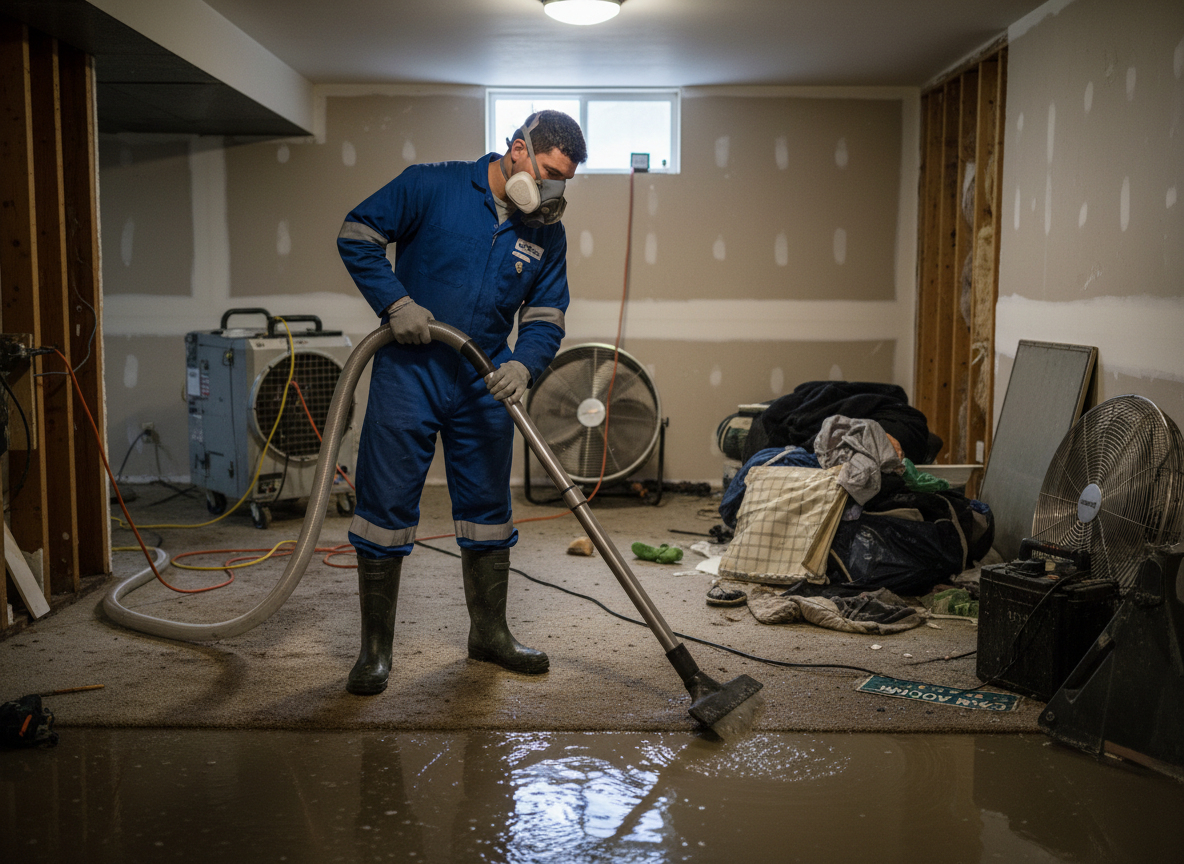
Water extraction in Canoga Park often starts with slab-on-grade homes built from the 1950s through the 1980s that sit on flat lots near Saticoy Street. When a supply line bursts or a summer monsoon drops heavy rain, water pools against the foundation and wicks into the stucco. Portable extraction units with 2-inch hoses pull the bulk volume first, then subfloor cavities are reached with wand attachments to avoid trapping moisture under vinyl or tile. Los Angeles County code requires removal of saturated insulation within 48 hours, so crews document moisture readings on every wall cavity before drywall is opened.
Hot, dry afternoons in the San Fernando Valley speed surface drying yet leave hidden pockets under cabinets and behind baseboards in Warner Center condos. Technicians use infrared cameras to map these zones because the Mediterranean climate creates a steep moisture gradient between sun-exposed stucco and shaded north walls. Failure to extract to 12-15 percent moisture content can lead to swelling particleboard subfloors common in homes near Pierce College. Extraction is halted only after three consecutive readings confirm equilibrium with outdoor humidity levels recorded at the job site.
Nearby neighborhoods such as Woodland Hills, Chatsworth and Winnetka share the same aging cast-iron drains that crack at the joints after decades of root intrusion. Extraction crews stage equipment on driveways to avoid blocking narrow residential streets and run discharge hoses to the street gutter only when permitted by local stormwater rules. In multi-story apartments near Westfield Topanga, water migrates downward through chase walls, requiring extraction on two floors simultaneously to prevent ceiling collapse in the unit below.
Technician insight
In Canoga Park the thing that catches most people out with water extraction is how fast the hot dry summers dry the surface stucco while water stays trapped behind the weep screed on 1960s ranch homes near Pierce College; if you stop too soon you will chase mold two weeks later when the next Santa Ana wind hits.
Burst Supply Line Under Kitchen Slab
A homeowner in a 1972 ranch near Warner Center called after a supply line split under the slab. Water had traveled under the vinyl and wicked six feet into the family-room drywall. Extraction units pulled 180 gallons from the slab edge and wall bases over four hours; follow-up readings confirmed all cavities returned to ambient levels within 36 hours.
How it works
- 1
Site Assessment
Technicians arrive within the hour, locate the water source, and map affected rooms using moisture meters while noting slab elevation and stucco condition typical of Canoga Park construction.
- 2
Standing Water Removal
High-volume pumps and truck-mounted vacuums extract visible water from floors and yards, routing discharge away from neighboring properties in accordance with Los Angeles County guidelines.
- 3
Hidden Moisture Extraction
Wand attachments and air movers reach under cabinets, behind baseboards and inside wall cavities where water has wicked into older lath-and-plaster or drywall assemblies.
- 4
Verification and Documentation
Final moisture readings are logged on every surface; photos and meter data are provided to the homeowner before equipment is removed from the 23217 Saticoy St service area.
Pricing
Cost depends on water volume, number of affected rooms and whether slab or wall cavities require extra time; upfront quotes are given on site before work begins.