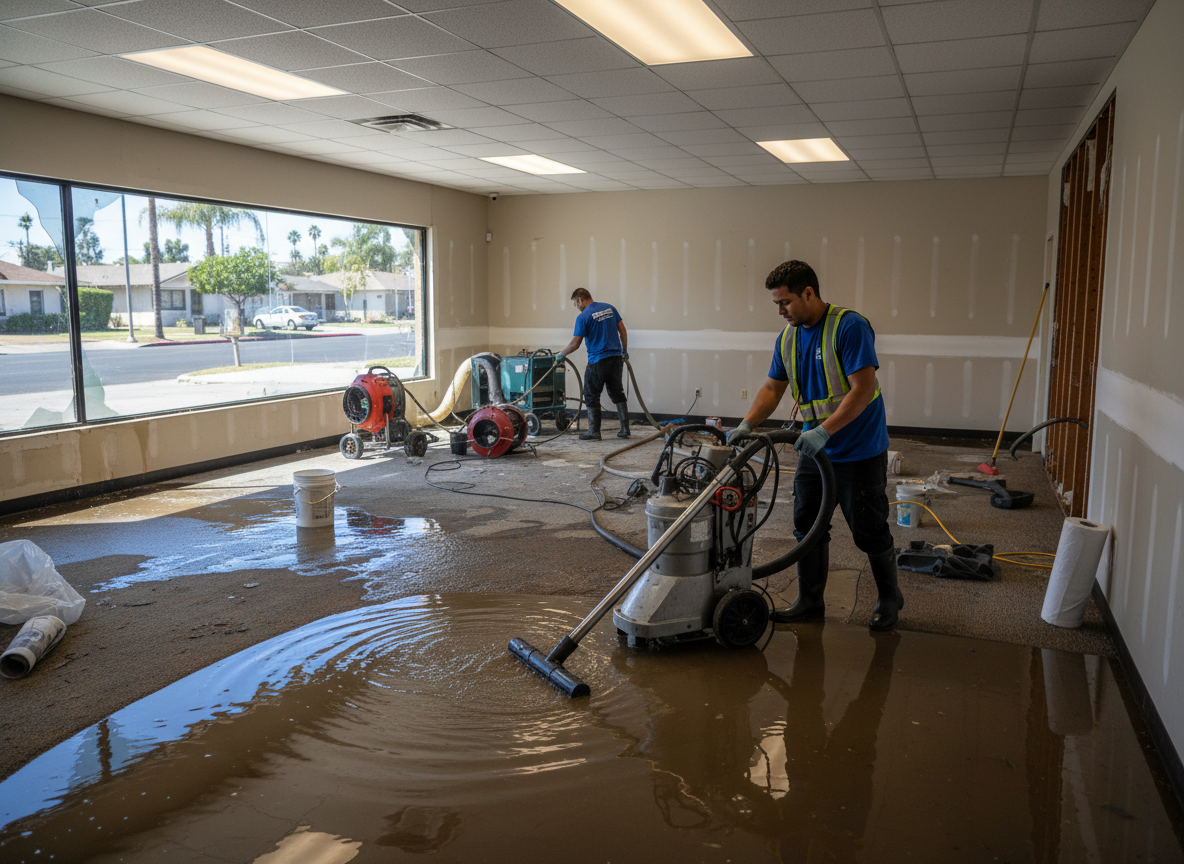
Canoga Park homes built from the 1950s through 1970s often sit on concrete slabs or have crawl spaces that trap water after pipe failures or appliance leaks. In the warm Mediterranean climate, hot dry summers accelerate evaporation that hides moisture under flooring until it migrates toward Warner Center or Pierce College properties. Technicians use moisture meters and thermal imaging to locate hidden saturation before it reaches neighboring units in multi-family buildings common along Saticoy Street.
Sudden water events from main-line breaks or roof overflows demand immediate pumping to protect hardwood, drywall, and electrical systems. Crews stage extraction equipment at the 23217 Saticoy St base and reach jobs in Chatsworth or Winnetka within the hour. Edge cases include water that travels under stucco walls into adjacent garages or reaches soil that stays saturated longer because of local clay content, requiring repeated visits to confirm dryness before any rebuild.
Los Angeles County code requires proper disposal of contaminated water and documentation of extraction volumes. Technicians separate clean versus category-three water on site, using containment barriers to keep affected zones from spreading into unaffected rooms. Work stops only after readings drop below 15 percent moisture content on all affected materials, preventing callbacks that occur when summer heat drives hidden dampness back to the surface weeks later.
Technician insight
In Canoga Park, the thing that catches most people out with Emergency water removal is how water travels under 1960s slab homes near Saticoy Street after even modest rain or a supply-line break. It wicks toward Warner Center foundations and stays hidden until the dry summer heat pushes it back up into baseboards. Homeowners who skip the meter checks almost always see mold appear inside thirty days.
Kitchen Flood from Supply Line
A supply line split behind a cabinet in a Canoga Park house near Westfield Topanga. Water ran under the slab and reached the adjacent laundry room. Extraction equipment pulled the standing water, meters guided drying under the flooring, and repeat visits confirmed dryness before any reconstruction began.
How it works
- 1
Arrival and Assessment
Technician arrives with pumps and meters, maps water migration through the structure, and identifies safety hazards before starting removal.
- 2
Water Extraction
High-volume pumps and wands pull standing water from floors, carpets, and cavities while containing runoff to prevent further spread.
- 3
Moisture Mapping and Drying Setup
Infrared scans locate residual moisture behind walls and under slabs; air movers and dehumidifiers are positioned for targeted drying.
- 4
Final Verification
Repeat meter readings confirm dryness, affected materials are documented, and the site is cleared for any needed repairs.
Pricing
Pricing varies by water volume, access difficulty, and how many rooms require drying; quotes are provided after the initial assessment.