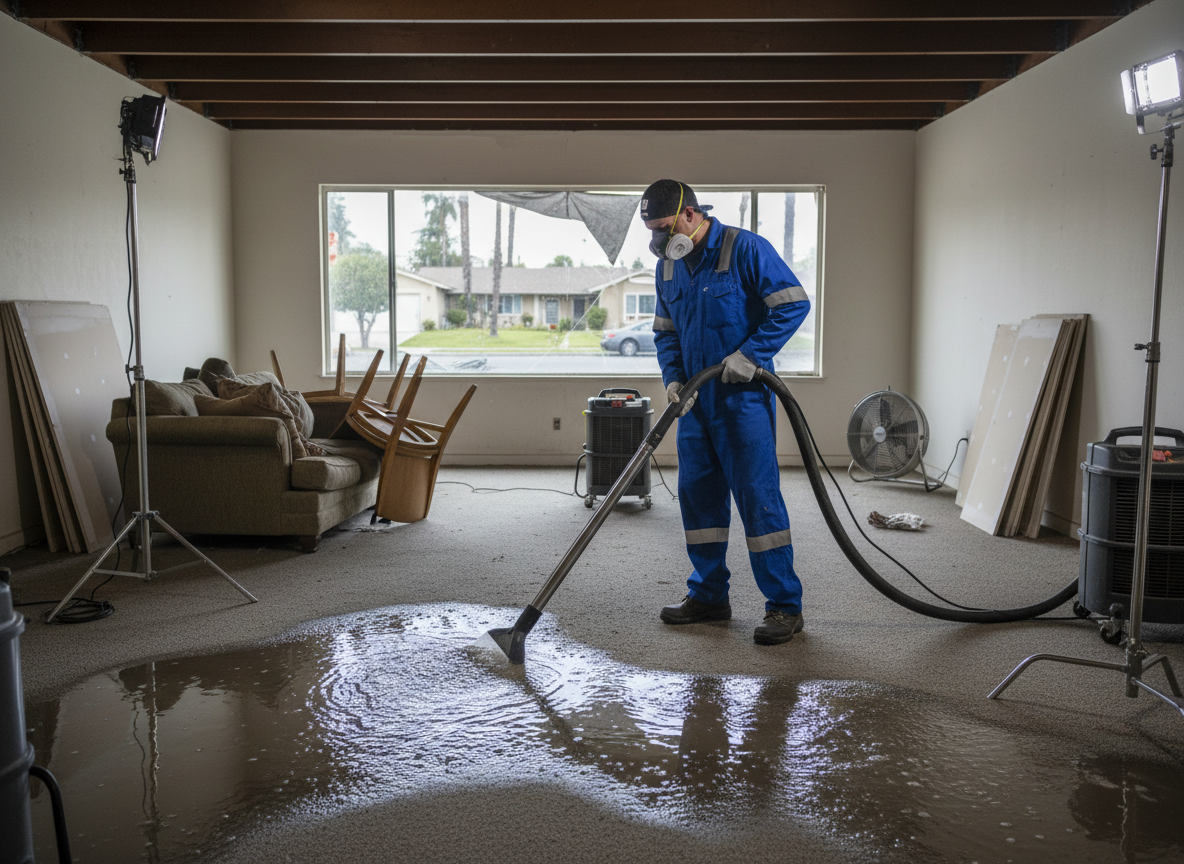
Canoga Park homes built from the 1950s through the 1970s often sit on concrete slabs or have crawl spaces that let floodwater travel under floors and into wall cavities before anyone notices. Hot, dry summers followed by sudden winter rains can overwhelm older roof drains and gutters around Warner Center, sending water into single-story ranch houses and light commercial buildings near Pierce College. Technicians must pull baseboards, check under vinyl and hardwood, and use moisture meters on drywall because hidden saturation leads to mold within 48 hours in this climate.
Extraction begins with truck-mounted pumps and portable wands to remove standing water from carpets and tile, then air movers and dehumidifiers are placed to dry the structure. In neighborhoods like Winnetka and Chatsworth, shared walls in townhomes mean water can migrate to adjacent units, requiring coordination with property managers. Los Angeles County building codes require permits when structural materials are removed, so crews document every step and separate salvageable contents from items that must be discarded.
After drying, antimicrobial treatments are applied to studs and subfloors, followed by reconstruction that matches original finishes. Properties close to the 101 freeway often have added fill dirt that changes drainage patterns, so restoration plans include regrading around foundations to reduce repeat flooding.
Technician insight
In Canoga Park the thing that catches most people out with flood restoration services is how fast water travels under 1960s slab foundations near Warner Center. A small laundry-room leak can reach the living room and the neighbor’s unit before anyone smells it, especially when summer heat keeps windows closed and humidity stays trapped inside.
Burst supply line in a Canoga Park ranch home
A homeowner in Canoga Park returned from work to find water across the kitchen and into the hallway. Inspection showed a failed copper line under the slab that had traveled under the vinyl flooring and into the drywall. Crews extracted the water, dried the subfloor for five days, removed and replaced the wet drywall, and treated the slab before reinstalling baseboards and flooring.
How it works
- 1
Emergency Assessment
Technicians arrive within hours, locate the water source, and map moisture throughout the property using meters and thermal imaging.
- 2
Water Extraction
Standing water is removed with pumps and vacuums while contents are inventoried and moved to prevent further damage.
- 3
Drying and Monitoring
Industrial air movers and dehumidifiers run until moisture readings return to normal, with daily checks logged for insurance.
- 4
Sanitization and Reconstruction
Affected materials are treated or replaced, then finishes are restored to match the original condition of the Canoga Park home.
Pricing
Upfront quotes are provided after on-site inspection because flood volume, affected materials, and access in older Canoga Park homes vary widely.