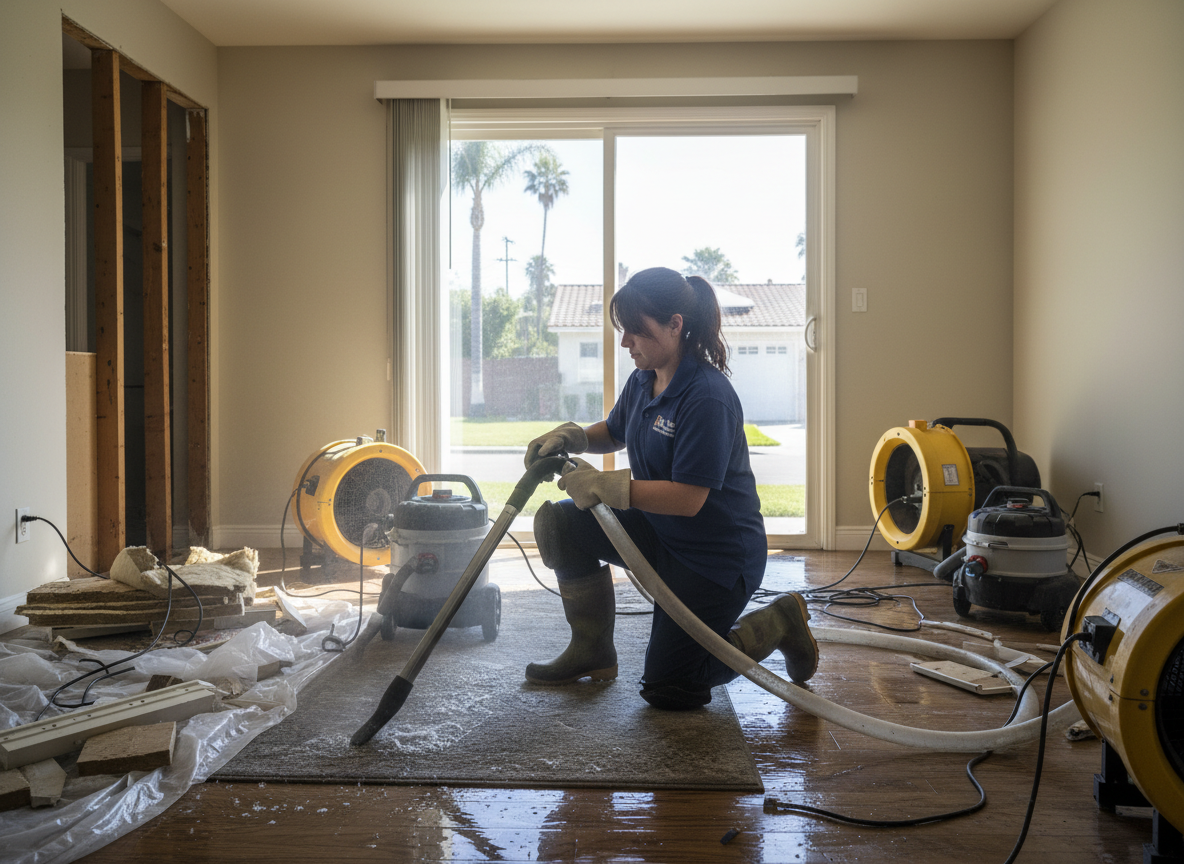
Canoga Park homes built from the 1950s through the 1970s often have galvanized or early copper supply lines that corrode at joints behind walls. When a pinhole leak develops, water travels along the slab or into the stucco base before surfacing near the foundation. Restoration crews must open drywall only where moisture meters confirm saturation, then extract water from under the slab edge before mold sets in during the warm, dry summer months when airflow is limited.
Near Pierce College and in the Warner Center apartments, slab-on-grade construction with post-tension cables limits where we can core or trench. We map the cable layout first, then use negative air and dehumidification sized for the square footage rather than guessing at runtime. This prevents secondary damage to adjacent units when a leak crosses property lines into a neighbor’s unit in Winnetka or Chatsworth.
Hot summer temperatures accelerate evaporation from exposed wet drywall, leaving mineral stains that require multiple cleaning passes. We document every step with photos because insurance adjusters in Los Angeles County frequently request proof that we addressed the leak source before approving drywall replacement.
After extraction, we place air movers at 45-degree angles along the base plates and monitor relative humidity daily until readings stabilize below 50 percent. This protocol accounts for the region’s low summer humidity that can mask lingering moisture inside wall cavities.
Technician insight
In Canoga Park the thing that catches most people out with water leak restoration is how fast a small supply-line leak travels under the slab and into the neighbor’s unit in a Warner Center condo. Older homes here have no vapor barrier under the concrete, so moisture wicks sideways fast during our dry summers when windows stay closed.
Hidden supply leak behind kitchen wall
A homeowner in Canoga Park noticed buckling vinyl near the sink. We traced elevated moisture 14 feet along the slab into the adjacent bathroom. After isolating the pinhole in the galvanized line and extracting water from under the cabinets, drying took four days. The wall was opened only at the leak point and the homeowner avoided full kitchen tear-out.
How it works
- 1
Leak Source Location
Technicians use moisture meters and infrared cameras to trace the leak through walls and under slabs without unnecessary demolition.
- 2
Water Extraction
Portable extractors and subfloor drying mats remove standing water and pull moisture from hardwood and concrete in Canoga Park homes.
- 3
Drying and Monitoring
Industrial dehumidifiers and air movers run until moisture readings drop to pre-loss levels, with daily checks logged for the homeowner.
- 4
Sanitizing and Odor Control
Antimicrobial treatment is applied to affected framing and subfloors to prevent microbial growth before reconstruction begins.
- 5
Final Verification
Post-drying inspection confirms all materials are dry and the original leak point has been repaired by a licensed plumber.
Pricing
Cost depends on access to the leak, square footage affected, and whether slab drying is required.