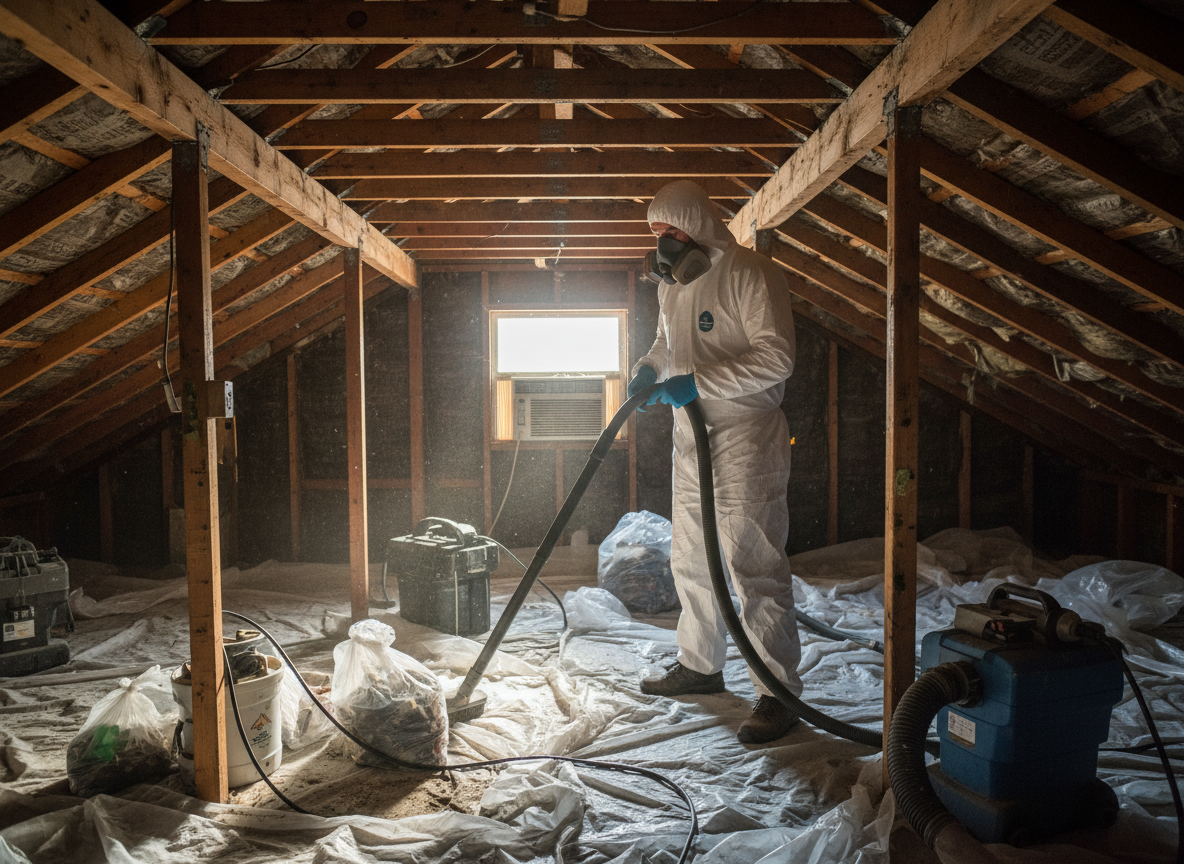
Canoga Park sits in Los Angeles County with a warm Mediterranean climate that brings hot, dry summers and occasional winter rains. Many homes in neighborhoods around Warner Center and near Westfield Topanga were built decades ago with attics that rely on minimal ridge vents or gable vents. When roof penetrations or HVAC condensation introduce moisture, mold colonies form on rafters and insulation before homeowners notice musty odors downstairs. Remediation requires isolating the attic, removing affected materials, and addressing the moisture source rather than simply spraying surfaces.
Technicians working these jobs routinely encounter cellulose insulation that has wicked water from small leaks around plumbing stacks or skylights common in Canoga Park construction. Dry summers can mask ongoing issues until a sudden humidity spike or AC cycle creates condensation on cooler sheathing. Proper protocol includes negative air machines exhausting through windows, HEPA filtration, and disposal of porous materials that cannot be cleaned to IICRC standards. Homeowners in nearby Chatsworth and Winnetka often call after noticing ceiling stains that trace back to attic conditions they cannot see.
Access in these single-story and two-story homes frequently means cutting inspection openings in ceilings or using pull-down ladders that limit equipment movement. After removal, antimicrobial treatments are applied only after drying verification with moisture meters. Final clearance testing confirms spore levels match outdoor baselines before insulation replacement. Skipping the drying step or failing to seal the moisture entry point leads to rapid recurrence once summer heat returns.
Local terrain plays a role too. Properties near Pierce College sit on flatter lots where roof drainage can pool against eaves during rare heavy rains, pushing water under flashing. Remediation crews must trace these paths carefully to prevent callbacks.
Technician insight
In Canoga Park the thing that catches most people out with attic mold remediation is older homes around Warner Center that have minimal attic ventilation combined with hot dry summers. Condensation builds on the underside of the roof deck from AC ducts even when it feels dry outside, and homeowners keep treating the smell without fixing the airflow or the small roof leak letting water in during winter rains.
Warner Center Home with Hidden Attic Growth
A homeowner near Westfield Topanga noticed a musty smell in upstairs bedrooms but no visible water stains. Inspection revealed mold on rafters above an older bathroom vent that had leaked during winter rains. The crew isolated the attic, removed saturated insulation, dried the structure, sealed the vent penetration, and replaced insulation after clearance testing.
How it works
- 1
Inspection and Moisture Mapping
Technicians enter the attic from Canoga Park homes to locate visible mold, test moisture in wood and insulation, and identify the water source using meters and infrared.
- 2
Containment Setup
Plastic barriers and negative air machines isolate the attic to prevent spores from migrating into living spaces during removal.
- 3
Material Removal and Cleaning
Affected insulation and porous materials are bagged and removed; rafters and sheathing are HEPA-vacuumed and treated after drying confirmation.
- 4
Source Repair and Drying
Roof leaks, vent issues, or condensation sources are addressed, then the attic is dried with air movers before clearance testing.
- 5
Final Clearance and Restoration
Post-remediation testing verifies safe spore levels; new insulation is installed and access points are sealed.
Pricing
Cost depends on attic size, extent of contamination, and whether roof or HVAC repairs are required before insulation replacement.