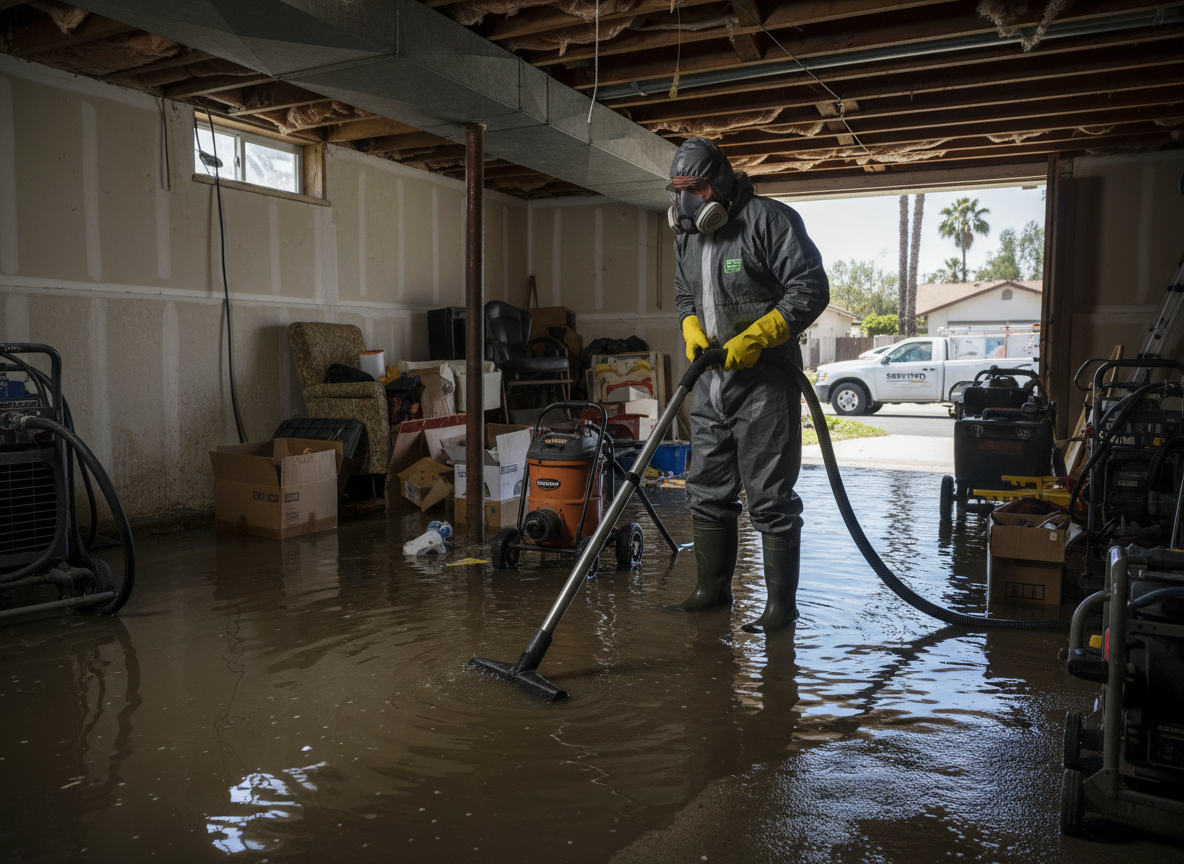
Canoga Park homes near Warner Center and Westfield Topanga often sit on older foundations that channel water from sudden winter rains into basements or lower levels. Hot dry summers bake the ground then intense downpours overwhelm drainage, pushing water through cracks or around window wells. Local techs see this pattern repeat every wet season when runoff from nearby hills collects against slab edges and older stucco walls common in the area.
Extraction starts with pumps rated for the volume typical in Los Angeles County single-family homes, followed by industrial dehumidifiers to pull moisture from concrete and framing. Mold risk rises fast in the warm climate once water sits more than 48 hours, so crews remove affected drywall and insulation before it spreads to adjacent rooms. Homes close to Pierce College or along Saticoy Street frequently have finished basements that require careful separation of wet carpet and padding to avoid cross-contamination.
Technicians check for hidden pockets behind cabinets or under stairs because Canoga Park's post-war housing stock often includes partial lower levels with limited access. Proper drying prevents warping of subfloors that later telegraph through new flooring. Every job ends with moisture readings logged for the homeowner's records before any reconstruction begins.
Technician insight
In Canoga Park, the thing that catches most people out with Basement flood cleanup is how quickly water travels under the slab from one side of the house to the other during a storm because many older homes here sit on compacted fill that channels runoff straight toward foundations near Saticoy Street.
Warner Center townhome after heavy rain
Water entered through a window well and spread across the finished basement floor. We found the source was clogged exterior drains typical after dry summers. Extraction and targeted drying kept damage from reaching the neighboring unit while we removed saturated carpet and baseboards.
How it works
- 1
Initial Assessment
Arrive on site, locate water source, and map affected areas in the basement while documenting conditions for insurance.
- 2
Water Removal
Deploy pumps and wet vacuums to extract standing water before it migrates to adjacent rooms or Warner Center neighboring properties.
- 3
Drying and Monitoring
Place air movers and dehumidifiers, then track moisture levels daily until readings return to normal for the structure.
- 4
Sanitization and Restoration Prep
Apply antimicrobial treatments to concrete and framing, remove unsalvageable materials, and ready surfaces for repairs.
Pricing
Upfront quotes after inspection; final cost depends on water volume, affected square footage, and materials removed.