Canoga Park homes built from the 1950s through the 1970s commonly sit on raised foundations with crawl spaces that trap humidity during the region's warm Mediterranean winters. Moisture from rain or over-irrigation seeps into soil beneath the home and lingers because summer heat dries the surface fast while leaving deeper dampness against wooden joists and subfloor insulation. This creates ideal conditions for mold on cellulose materials that later affects indoor air once residents turn on heating or cooling systems.
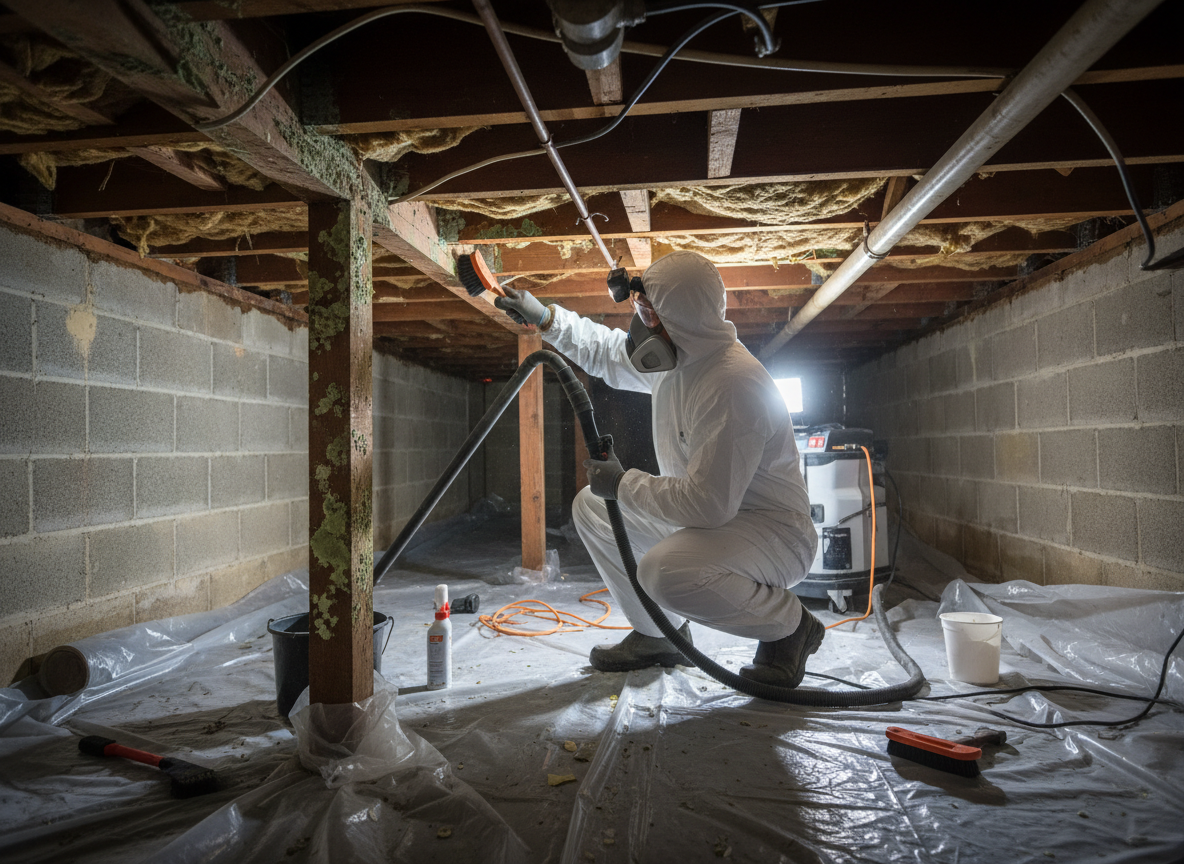
Removal work here requires full negative-air containment to keep spores from drifting into living spaces, especially in neighborhoods close to Pierce College or Westfield Topanga where homes sit close together. Technicians must pull back insulation carefully, treat affected wood with EPA-registered antimicrobials, and improve ventilation with vapor barriers and exhaust fans rated for the local dry-summer climate. Edge cases include older knob-and-tube wiring that limits equipment placement and narrow access points under additions common in Winnetka-adjacent blocks.
After removal, crews focus on drying the soil and framing to below 12 percent moisture content before reinstalling insulation, because residual dampness returns quickly once the next storm hits from the west. Homeowners in Chatsworth and Woodland Hills often discover the problem only after musty odors appear in bedrooms directly above the crawl space, making early inspection critical before the issue spreads to HVAC ducts.
Technician insight
In Canoga Park, the thing that catches most people out with crawl space mold removal is how irrigation around older homes near Westfield Topanga keeps the soil damp year-round even though summers are bone dry, so the mold never fully dries out on its own.
Warner Center Crawl Space Odor Complaint
A homeowner noticed a musty smell in bedrooms above the crawl space after winter rains. Inspection found black mold on joists from poor ventilation and ground moisture. Crews contained the space, removed insulation, treated the wood, and added a vapor barrier. Odors disappeared and moisture readings stayed low through the following summer.
How it works
- 1
Initial Assessment
Technicians enter the crawl space from the address on Saticoy Street to map moisture levels, identify mold on joists, and note ventilation gaps typical in Canoga Park foundations.
- 2
Containment Setup
Plastic sheeting and negative air machines isolate the work area so spores do not reach living spaces above or neighboring homes in Warner Center.
- 3
Mold Removal and Treatment
Affected insulation is removed, wood is cleaned and treated, and a vapor barrier is installed to block ground moisture common after winter rains.
- 4
Drying and Verification
Air movers and dehumidifiers run until readings drop below 12 percent, then clearance testing confirms the space is ready for re-insulation.
Pricing
Pricing varies by crawl space size, access difficulty, and amount of insulation that must be replaced; we provide a written quote after the on-site inspection.