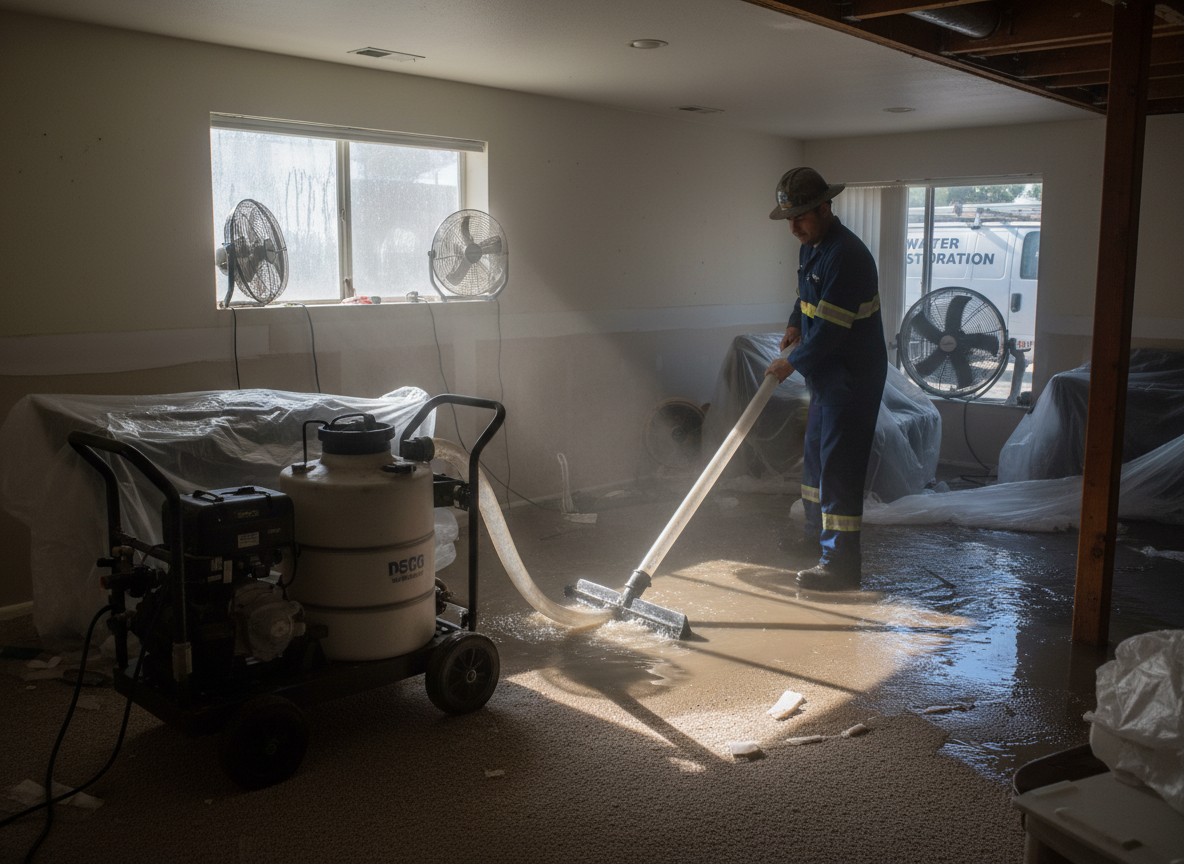
Water extraction in Canoga Park often involves older single-family homes built before 1970 with concrete slab foundations and stucco exteriors that can hide moisture after even minor leaks. Hot dry summers followed by occasional winter rains mean water from roof penetrations or appliance failures can sit undetected until it reaches drywall or subflooring near Warner Center. Technicians must use moisture meters on multiple layers because the Mediterranean climate keeps ambient humidity low most of the year, masking slow evaporation behind cabinets or under tile in bathrooms.
Los Angeles County codes require proper disposal of extracted water and documentation when properties sit close to the flood-prone washes that feed into the Los Angeles River. In neighborhoods like Winnetka and Chatsworth, narrow lots and shared driveways limit equipment access, so portable extractors and air movers are positioned carefully to avoid disturbing neighboring properties. Homeowners near Pierce College frequently see water migrate under hardwood floors installed over concrete, requiring removal of baseboards before full extraction to prevent warping that appears weeks later.
Edge cases include extraction after commercial leaks at Westfield Topanga retail spaces where vinyl composition tile can trap water against the slab, creating conditions for microbial growth even in dry summer air. Crews document every step because insurance adjusters in the area expect photos of affected materials and readings from multiple rooms before approving drying equipment placement.
Seasonal Considerations
Heavy but infrequent winter storms can overwhelm older gutters on Canoga Park homes, sending water under stucco and into wall cavities. Extraction crews prioritize these hidden paths first rather than surface water alone to avoid callbacks when summer heat returns.
Technician insight
In Canoga Park, the thing that catches most people out with Water extraction company is how homes built on slabs near Pierce College trap water under tile or carpet after winter rains, and the dry summer air makes surface readings look fine while moisture stays hidden against the concrete.
Slab Leak Under Tile in Canoga Park Home
A kitchen supply line failed in a 1960s house near Warner Center. Extraction crews found water had traveled under the tile and into the slab edge. They removed baseboards, extracted standing water, and ran drying equipment for four days until meters read dry. No mold developed and the homeowner avoided full floor replacement.
How it works
- 1
On-Site Assessment
Technicians arrive within hours, locate the water source, and map moisture across slabs, walls, and flooring using meters calibrated for local stucco and concrete construction.
- 2
Water Removal
Portable and truck-mounted extractors pull standing water from carpets, pads, and hard surfaces while protecting adjacent rooms in dense Canoga Park neighborhoods.
- 3
Targeted Drying
Air movers and dehumidifiers are placed based on readings from multiple rooms, with daily monitoring to confirm moisture levels drop in slab homes common near Woodland Hills.
- 4
Final Verification
Post-extraction readings and photos document dry conditions before equipment removal, satisfying Los Angeles County insurance requirements.
Pricing
Cost depends on water volume, number of affected rooms, and access challenges in older Canoga Park homes with slab foundations.